Handshakes That Became Studies: The Transatlantic Research Partnerships Born at Vienna 2020

Photo: international researchers collaborating around conference table with laptops and research papers, via img.freepik.com
Scientific conferences are often evaluated by the quality of their plenary sessions, the prestige of their keynote speakers, or the novelty of the data presented on their main stages. These are fair measures. But they capture only a portion of what actually happens when researchers from different countries, institutions, and clinical traditions occupy the same space for several days. At EADV Vienna 2020, some of the most consequential moments occurred not in lecture halls but in the margins — over coffee between sessions, during poster viewing hours, and at the informal gatherings that conferences invariably produce.
Five years later, a number of those marginal moments have matured into formal research partnerships, published studies, and ongoing clinical trials. Tracing their origins offers both a compelling narrative and a practical guide for dermatologists seeking to build their own international networks.
The Anatomy of an Accidental Collaboration
Dr. Jonathan Freed, a dermatologist and researcher at a major academic medical center in Boston, had no particular plan to begin a collaborative project when he traveled to Vienna in 2020. He was presenting a poster on cutaneous manifestations in immunocompromised patients and expected the experience to be professionally enriching but self-contained. What he did not anticipate was a conversation with Dr. Annika Lindström, a Swedish researcher whose work on skin barrier function in immunosuppressed populations overlapped significantly with his own — despite using entirely different methodological frameworks.
"We were both looking at the same patient population through completely different lenses," Dr. Freed recalled. "She was approaching it from a molecular biology angle, I was coming from a clinical phenotyping perspective. Neither of us had really considered combining those approaches until that conversation."
Within six months of Vienna 2020, the two had submitted a joint grant proposal to their respective funding bodies. By 2022, they had published a co-authored paper in a peer-reviewed dermatology journal examining immune-mediated skin changes in solid organ transplant recipients — a paper that has since been cited in multiple clinical guidelines on both sides of the Atlantic.
Structural Factors That Made Vienna a Fertile Ground
The emergence of collaborations like the Freed-Lindström partnership was not accidental in any systemic sense. EADV Vienna 2020 was deliberately designed to create conditions for cross-border scientific exchange. Its poster sessions were organized thematically rather than geographically, ensuring that researchers working on related questions — regardless of nationality — occupied the same physical and intellectual space. Networking programming explicitly paired attendees with complementary research profiles. And the congress's international character meant that the room was, almost by definition, full of people who approached shared problems from divergent institutional and cultural contexts.
For American dermatologists, this environment represented something genuinely distinct from domestic conferences. The AAD annual meeting, for all its scientific rigor, draws primarily from within the US research ecosystem. Vienna introduced researchers to funding structures, patient registries, regulatory frameworks, and methodological traditions that simply do not exist in the American context — and that, when combined with American data and resources, can produce research that neither partner could have conducted independently.
Case Study: A Joint Psoriasis Registry
Among the more structurally ambitious collaborations to emerge from Vienna 2020 is a joint patient registry project linking a US academic dermatology department with two European clinical sites — one in the Netherlands, one in Italy. The project, which focuses on long-term biologic treatment outcomes in moderate-to-severe psoriasis, was conceived during a working dinner convened informally by several attendees who had discovered overlapping research interests during the congress.
The registry now includes longitudinal data from over 800 patients across three countries, with a dataset that allows the research team to examine treatment response variations across different genetic backgrounds, healthcare delivery models, and prescribing practices. Publications from the registry have addressed questions that no single-country dataset could have answered — including whether differences in biologic dosing protocols between European and American clinical guidelines produce measurable differences in long-term remission rates.
Dr. Priya Anand, one of the US-based investigators on the project, described the registry as a direct product of the Vienna environment. "We didn't walk into that dinner planning to build a three-country dataset. We walked in because someone suggested we continue a conversation we'd started in a hallway. The formal structure came later, but the intellectual energy came from being in that room together."
Navigating the Practical Barriers to International Collaboration
For dermatologists inspired by these examples, the path to international research partnership is real but not frictionless. Institutional review board protocols differ across countries, raising questions about data sharing agreements and patient consent frameworks that require careful legal navigation. Funding bodies — the NIH in the United States, national research councils in European countries — each have their own rules about how international collaborators can be included in grant structures.
Language, while less of a barrier in dermatology than in some other fields given the prevalence of English-language scientific publishing, still shapes the dynamics of collaboration. And time zone differences, while manageable, require genuine logistical coordination that can strain research teams already operating under significant institutional workloads.
Yet the researchers who have successfully built these partnerships consistently identify a common thread: the personal relationship established at a conference like Vienna 2020 provides the social infrastructure that makes the logistical challenges navigable. "When you trust someone scientifically and personally, you figure out the paperwork," Dr. Freed observed. "When you're trying to build a collaboration entirely through email with someone you've never met, the first bureaucratic obstacle tends to end the conversation."
Building Your Own International Network: Practical Insights
For US dermatologists considering international congress attendance as a research strategy rather than simply a continuing education exercise, several practical principles emerge from the Vienna 2020 experience.
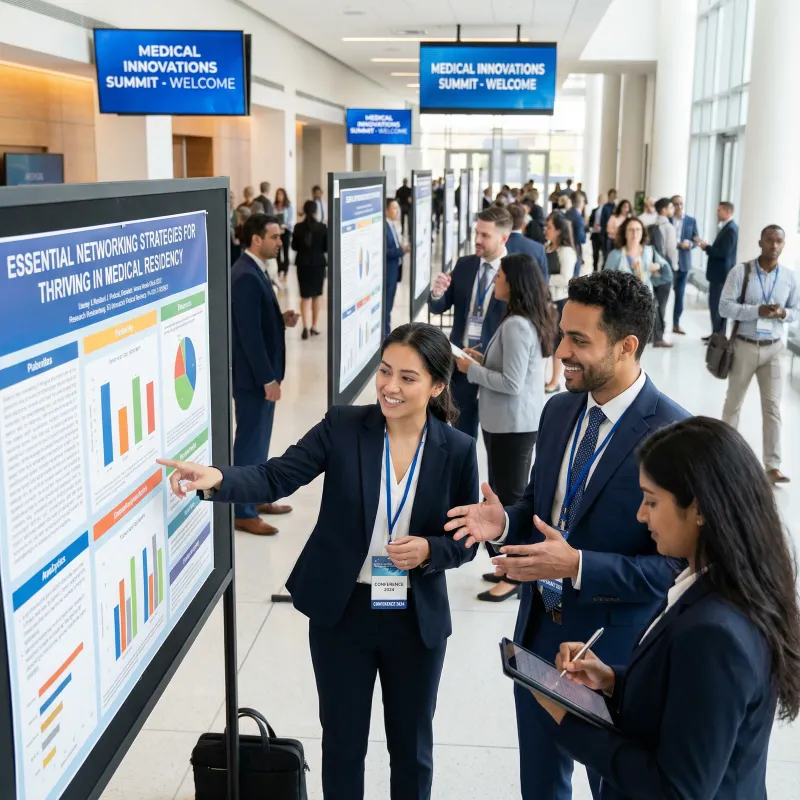
First, engage with poster sessions as a primary rather than secondary activity. The informal, conversational format of poster viewing creates conditions for substantive scientific exchange that plenary sessions cannot replicate. Identify posters in your research area before the congress begins and arrive with genuine questions rather than courtesy compliments.
Second, be explicit about your research interests and available resources early in any promising conversation. European researchers often have access to patient populations, biobanks, or funding mechanisms that complement American strengths in clinical trial infrastructure and industry partnership. Naming these complementarities directly accelerates the move from interesting conversation to actionable proposal.
Third, follow up within two weeks of the congress. The window during which conference connections convert into active collaborations is narrow. A brief, specific email referencing a shared research question — sent while the conversation is still fresh — is far more likely to produce a lasting partnership than a connection request sent months later.
The Compounding Returns of Scientific Community
Perhaps the most important insight from the collaborations born at Vienna 2020 is that their value has compounded over time in ways that neither party could have predicted at the outset. Studies have produced further studies. Co-authors have introduced their collaborators to other researchers. Grant proposals have opened funding relationships that extended well beyond the original project scope.
The EADV Vienna 2020 congress was, in the most literal sense, a single event occupying a finite number of days. But the scientific community it helped construct continues to generate knowledge, challenge assumptions, and advance dermatology in ways that no conference program — however excellent — could have achieved alone. That is the truest measure of what international dialogue, pursued seriously and followed up diligently, can accomplish.