The Quiet Conversations: How Corridor Mentorships at Vienna 2020 Are Reshaping Who Leads American Dermatology
The official program of EADV Vienna 2020 ran to dozens of pages. Symposia, workshops, oral abstract sessions, and poster presentations filled the Messe Wien Exhibition and Congress Center across multiple days, each slot documented, credentialed, and available for continuing medical education credit. What no program booklet recorded were the conversations that happened between those sessions — in hallways, at lunch tables, and in the quieter corners of the exhibit floor — conversations that, for a number of American dermatologists, would prove more consequential than anything delivered from a podium.
The phenomenon of informal mentorship at international medical conferences is neither new nor unique to dermatology. What makes Vienna 2020 worth examining specifically is the density and quality of the cross-cultural mentoring relationships it appears to have generated, and the degree to which those relationships have since influenced specialty choices, research directions, and leadership trajectories among a cohort of US physicians who were, at the time of the conference, still in the early or middle stages of their careers.
The Architecture of Accidental Mentorship
Understanding how these relationships form requires appreciating the particular social architecture of a large international conference. EADV Vienna 2020 brought together dermatologists from across Europe, North America, Asia, and beyond — a gathering in which professional hierarchies, while present, are temporarily flattened by the shared context of being attendees rather than inhabitants of any single institutional environment.
For American physicians, and particularly for those who trained primarily within US academic medical centers, this flattening creates an unusual opportunity. Senior European dermatologists who might be difficult to approach within the formal structures of a home institution become accessible at a conference coffee station. A question asked after a particularly compelling session on immunodermatology or rare genodermatoses can, under the right circumstances, extend into an hour-long dialogue that neither party anticipated.
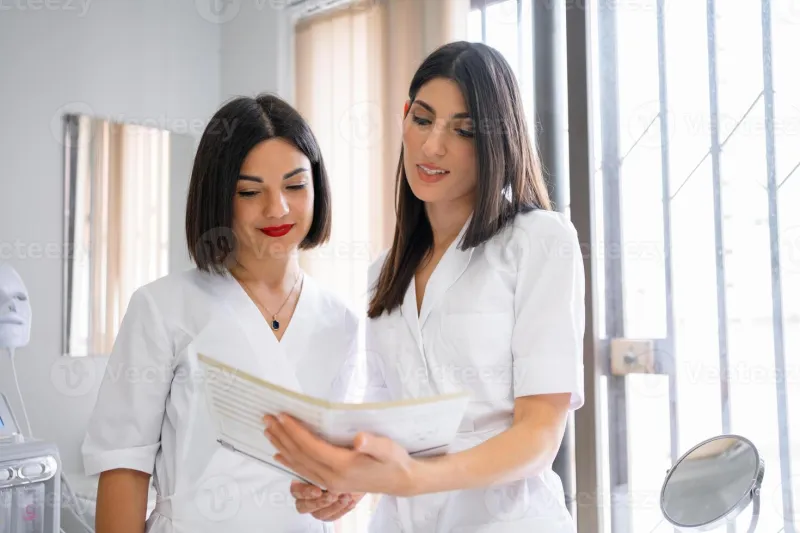
Several American dermatologists who attended Vienna 2020 described precisely this pattern. An early-career physician specializing in inflammatory skin disease recounted approaching a senior presenter from a major European academic center after a session on biologics in pediatric psoriasis — a therapeutic area underrepresented in her own institution's patient volume. What began as a question about study design became a sustained exchange about research methodology, grant strategy, and the organizational politics of building a subspecialty program. By the time the conversation concluded, the European physician had offered to review her grant application and connect her with a collaborative research network based in the Netherlands.
Why European Mentors Offer Something Distinct
The value that European mentors bring to American trainees and early-career physicians is not simply a matter of prestige or geographic novelty. It reflects genuine differences in clinical experience, research infrastructure, and professional philosophy that make the perspective of a senior European dermatologist meaningfully distinct from what is available within US academic networks.
European dermatology has, in several subspecialties, accumulated clinical volume and research depth that the American field has not yet matched. Rare inflammatory conditions, occupational dermatology, and certain procedural disciplines are managed at European centers with a frequency and institutional focus that US programs rarely replicate. A mentor who has spent twenty years building a specialized referral center for a given condition carries knowledge that no textbook or journal article fully transmits — knowledge that is, in practice, most efficiently conveyed through the kind of direct, ongoing relationship that informal conference mentorship can initiate.
Beyond clinical expertise, European senior faculty often operate within research funding and publication networks that are underutilized by American collaborators. Several of the mentoring relationships that originated at Vienna 2020 have since produced co-authored publications, joint grant submissions, and participation in multicenter European trials — outcomes that have materially strengthened the research portfolios of the American physicians involved.
Profiles in Accelerated Trajectory
The patterns described above are not hypothetical. Among the American attendees of Vienna 2020 who spoke with EADV Vienna 2020 editorial staff, multiple individuals identified a specific mentoring relationship formed at the conference as a turning point in their professional development.
One dermatologist, then a second-year fellow with an interest in contact dermatitis and occupational skin disease, described a conversation with a European professor whose work on patch testing methodology she had followed in the literature. The professor, she noted, was approachable in a way that his academic stature had led her to assume he would not be. Over the course of two days, they discussed her fellowship research, her interest in establishing an occupational dermatology clinic within a US academic center, and the organizational challenges such an effort would entail. The professor subsequently introduced her to a professional network of occupational dermatologists across Europe and provided a letter of support for her first independent grant application. She described the relationship as having compressed what might otherwise have been a decade of professional development into a far shorter arc.
A second physician, a junior faculty member at a Midwestern academic medical center with a focus on dermatologic surgery, recounted a mentorship that emerged from a workshop on advanced flap reconstruction. The European surgeon leading the session invited him to observe a procedure at his home institution the following year — an arrangement that ultimately shaped how the American physician restructured his own institution's surgical curriculum.
The Equity Question
The benefits of informal conference mentorship are real and well-documented in individual careers. They are also unevenly distributed, and that unevenness warrants acknowledgment.
The physicians most likely to form meaningful mentoring relationships at an event like Vienna 2020 are those who already possess the social confidence, institutional backing, and financial resources to attend and engage fully. Residents and early-career physicians from under-resourced programs, those without departmental travel support, or those for whom English is a second language navigate the informal social landscape of international conferences with greater difficulty. The mentorship pipeline that Vienna 2020 helped create is a genuine asset for American dermatology — but it is not, at present, an equitable one.
Addressing that inequity requires deliberate structural intervention: sponsored travel programs for physicians from under-resourced institutions, structured mentorship matching initiatives embedded within conference programming, and a broader recognition within academic dermatology that informal networking is not a peripheral benefit of conference attendance but a core mechanism of professional development that deserves intentional support.
What Informal Networks Reveal About Formal Structures
The mentoring relationships that Vienna 2020 generated are, among other things, a symptom of a gap in formal professional development infrastructure. When early-career American physicians must travel to Vienna to find the mentorship that accelerates their careers, it is worth asking why that mentorship is not more reliably available at home.
The answer is partly structural — senior faculty are overburdened, departmental cultures vary widely, and formal mentorship programs in academic medicine are notoriously inconsistent in quality. International conferences like EADV Vienna fill that void not because they are designed to do so, but because the conditions they create — geographic dislocation, intellectual stimulation, and the temporary suspension of institutional hierarchy — happen to be unusually conducive to the kind of honest, generative conversation that good mentorship requires.
The leadership pipeline that Vienna 2020 quietly seeded is only now beginning to become visible. The physicians who returned from Austria with a new mentor, a new research direction, or a newly clarified sense of professional purpose are, in many cases, still in the process of translating those gifts into institutional change. That process is worth watching — and worth facilitating.